1100 – 1300
Attacks on Kent's Coastal Airfields
The first targets for the day were the airfields near the Kent coast, with RAF radar picking up the start of the attack just after 1100 hours.
1215 – 1510
Luftflotte 5 Attacks North East England
Luftflotte 5, based in Norway and Denmark, was tasked with attacks on targets around Newcastle and Sunderland. German single-seater fighters could not escort the bombers because of the distance involved. This enabled RAF fighters to inflict heavy casualties when the bombers approached England just after noon.
1400 – 1630
Attacks on Airfields North and South of the Thames Estuary
At about 1415, an enemy raid was plotted approaching the Kent coast and RAF squadrons alerted. Before the attack took place, however, Messerschmitt Bf 109 and Bf 110 fighter bombers of Erprobungsgruppe 210 attacked RAF Martlesham Heath.
The Dornier Do 17 bombers of Kampfgeschwader 3, with a large escort of Bf 109 fighters, continued with their attacks on Rochester and Eastchurch airfields, causing damage to the Short Brothers aircraft factory at Rochester.
1700 – 1845
Attacks on Targets in Hampshire and Dorset
These attacks started at 1700 hours. In two separate operations, Junkers Ju 88 bombers attacked the airfields in Hampshire, while Junkers Ju 87 dive bombers attacked Portland in Dorset. Both raids were escorted by Messerschmitt Bf 109 and Bf 110 fighters.
The fighting was confused with RAF squadrons scrambled from Devon and Kent. The Luftwaffe suffered heavy losses.
1800 – 1930
Attacks on West Malling and Croydon
At about 1800 hours, a third attack on Kent airfields was detected. Dornier Do 17 bombers were sent to attack RAF Biggin Hill, while Messerschmitt Bf 109 and Bf 110 aircraft were to attack RAF Kenley.
Both raids caused damage on the ground but navigation errors meant the Luftwaffe bombed West Malling and Croydon by mistake.
1108 – 1300 Hawkinge and Lympne
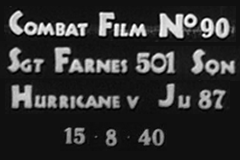
Radar picked up the raid starting just after 1100 hours. Over 40 Junkers Ju 87 dive-bombers of Sturzkampfgeschwader 1 and Lehrgeschwader 1 were escorted by 150-200 Messerschmitt Bf 109 fighters. They were intercepted by No. 54 Squadron Spitfires and Nos. 615 and 501 Squadron Hurricanes.
Although the bombers suffered losses, they badly damaged the RAF airfields. They also cut electrical power to RAF radar stations at Dover, Rye and Foreness.


1108 – 1300 RAF Manston
While the RAF was occupied with the bombing raid on Hawkinge and Lympne, another raid was missed approaching Kent. About 12 Messerschmitt Bf 110 aircraft from Zerstörergeschwader 76 attacked the airfield at Manston.
The Germans were able to attack Manston at will. None of their aircraft were shot down and they caused damage to the airfield, destroying two Spitfires on the ground.
1218 – 1510 Newcastle and Sunderland
Just after noon, Heinkel He 111 bombers of Kampfgeschwader 26, escorted by Messerschmitt Bf 110 twin-engine fighters from Zerstörergeschwader 76, were detected approaching the Northumberland coast.
RAF squadrons from Drem, Acklington, Usworth and Catterick attacked the German aircraft. The Germans had expected little resistance but were met by Nos. 41 and 72 Squadron Spitfires and Nos. 79, 605 and 607 Squadron Hurricanes. Losses were so high that Luftflotte 5 never attempted another daylight raid.

1300 – 1510 RAF Driffield, Bomber Command airfield
About 50 Junkers Ju 88 aircraft of Kampfgeschwader 30 crossed the North Sea from Denmark towards North Yorkshire.
The raid was detected about 1300 and intercepted by 12 No. 616 Squadron Spitfires and six No. 73 Squadron Hurricanes from RAF Leconfield. Bristol Blenheim IF fighters of No. 219 Squadron, from RAF Catterick, also attacked.
Although the German bombers succeeded in damaging RAF Driffield and destroying RAF aircraft on the ground, they suffered heavy casualties.


1400 – 1615 RAF Martlesham Heath
Just after 1400, a raid was detected approaching RAF Martlesham Heath, consisting of Messerschmitt Bf 109 and Bf 110 aircraft of Erprobungsgruppe 210.
Three No. 17 Squadron Hurricanes were able to take off from Martlesham Heath before the attack started. They were joined by No. 1 Squadron Hurricanes from RAF North Weald but could not prevent the attack. Spitfires of No. 19 Squadron, RAF Fowlmere, arrived too late to intercept the enemy.

1420 – 1630 Kent Coast Airfields
The main attack on Rochester and Eastchurch consisted of Dornier Do 17 aircraft from Kampfgeschwader 3 with a large escort of Messerschmitt Bf 109 fighters. Do 17 aircraft of Kampfgeschwader 2 and Heinkel He 111 bombers of Kampfgeschwader 1, again with a fighter escort, attacked Hawkinge and other targets on the south coast.
Several RAF squadrons were scrambled but they could not prevent the Short Brothers factory at Rochester being badly damaged, disrupting Short Stirling production.


1700 – 1845 Airfields in Hampshire
Junkers Ju 88 bombers from Lehrgeschwader 1 attacked the airfields of Middle Wallop, Odiham and Worthy Down, escorted by Messerschmitt Bf 110 fighters of Zerstörergeschwader 76.
The raid was spotted approaching the coast at about 1700 and was intercepted by one squadron of Spitfires and four squadrons of Hurricanes. In addition, a squadron of Bristol Blenheims from RAF Middle Wallop and a squadron of Hurricanes, sent to engage another raid, joined in causing heavy German losses.


1700 – 1845 Portland Naval Base
Junkers Ju 87 dive bombers from Sturzkampfgeschwaders 1 and 2 were tasked with attacking Portland Naval Base. They were given a large escort of Messerschmitt Bf 109 fighters from Jagdgeschwaders 27 and 53 and Bf 110 fighters from Lehrgeschwader 2
Nos. 152 and 234 Squadron Spitfires from Warmwell and Middle Wallop were joined by Nos. 87 and 213 Squadron Hurricanes from Exeter. Although the RAF suffered several losses, they prevented the bombers from reaching their target.


1830 – 1930 RAF West Malling
Dornier Do 17 bombers of Kampfgeschwader 76 were tasked with bombing RAF Biggin Hill with an escort of Messerschmitt Bf 109 fighters.
Nos. 54, 266 and 610 Squadron Spitfires and Nos. 151 and 501 Squadron Hurricanes were sent to intercept the raid. Although the RAF could not stop the attack, it was West Malling which was bombed due to navigation errors.


1845 – 1930 RAF Croydon
Erprobungsgruppe 210 had made a successful attack on RAF Martlesham Heath in the early afternoon. They were sent on a similar attack on RAF Kenley, equipped with Messerschmitt Bf 109 and Bf 110 fighters.
Nos. 32 and 111 Squadron Hurricanes from Biggin Hill and Croydon respectively were tasked with intercepting the raid. Instead of attacking Kenley, however, the raid targeted the former airport of Croydon. Although damage was caused to the airfield, the Luftwaffe suffered heavy losses.

1100 – 1300: Raids over Kent
Stop1215 – 1510: Raids over North East England
Stop1400 – 1630: Raids over the Thames Estuary
Stop1700 – 1845: Raids over Hampshire & Dorset
Stop1800 – 1930: Raids over Greater London & Kent
StopOn 15 August 1940, the RAF fighter pilots scrambled against ten Luftwaffe raids across Britain from 1100 hours to 2000 hours.
Please touch the arrow to start.

& Kent